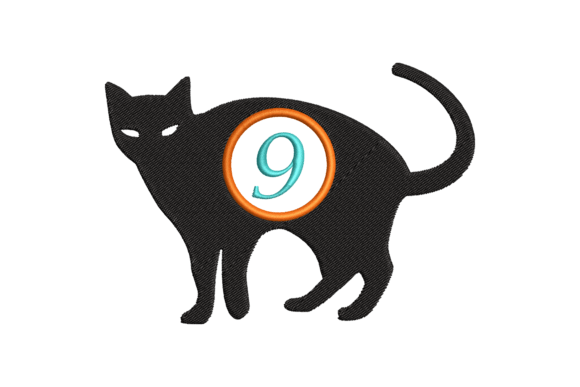
Black Cat Number 9: A Charming, Versatile Back-to-School Embroidery Design
First Impressions: Whimsy with Quiet Confidence
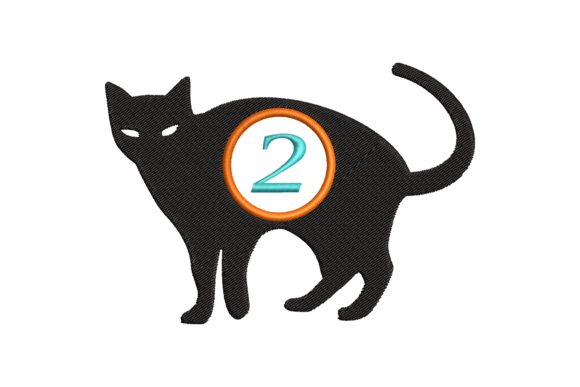
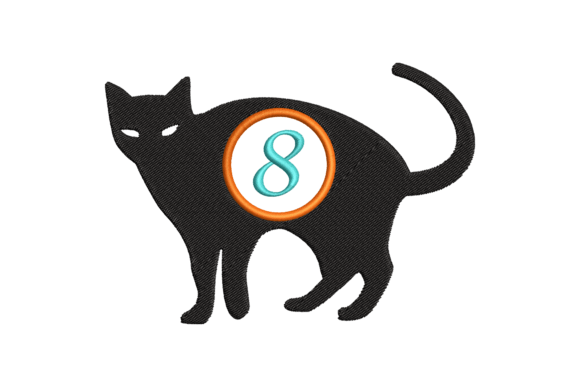
When I opened Black Cat Number 9, I didn’t see just another cat motif—I saw a small, confident statement. The silhouette is clean and slightly stylized: a seated black cat with a subtle curve to its tail, the number “9” nestled beside it in a friendly, rounded font. There’s no clutter—no whiskers rendered in fine detail, no excessive shading or gradients. Instead, it leans into bold shape and balanced negative space. That makes it feel instantly adaptable: playful enough for a child’s backpack, refined enough for a teacher’s apron, and quietly clever for a boutique tote bag.
A Real-World Test: Stitching It on a Linen-Cotton Tote Bag
Last week, I used Black Cat Number 9 on a natural linen-cotton blend tote for a local educator’s back-to-school launch. I chose medium-weight cutaway stabilizer and tested stitch density first on scrap fabric—it held up beautifully without puckering or thread nesting. The design stitched out smoothly in under 8 minutes on my mid-arm machine, with clear satin-stitched outlines defining the cat’s ears and the number’s curves. No fill-stitch flooding, no running-stitch bleed. What stood out most was how legible it remained at 3.5 inches wide—small enough for a pocket but still readable from across a classroom.
Where It Shines (and Where It Asks for Care)
Black Cat Number 9 excels in projects where charm meets clarity:
- Custom apparel: Works especially well on crewneck sweatshirts and lightweight tees—its compact footprint avoids bulk while still reading as intentional, not afterthought.
- Personalized gifts: Paired with a child’s name on a baby onesie or a holiday tea towel, it adds warmth without overwhelming delicate fabrics.
- Small business merchandise: For Etsy sellers or craft fair vendors, it’s a smart anchor design—easy to pair with coordinating fonts or simple borders in mockups.
- Embroidered patches: Clean edges and moderate stitch count mean it transfers cleanly to iron-on or sew-on patch blanks.
But it does ask for thoughtful execution in certain contexts:
- Avoid using it below 2.25 inches on highly textured fabrics like bouclé or heavy terry—fine details in the number’s curve can blur.
- On stretchy knits (like jersey tees), always use tear-away + topping combo—otherwise, the cat’s outline may distort slightly during wear.
- For dark fabric backgrounds, test thread colors carefully—standard black thread on charcoal fabric loses contrast; a deep navy or charcoal-gray thread lifts the design more effectively.
- On curved surfaces like caps or beanies, confirm hoop compatibility—some versions of this design may sit too high on the crown unless digitized with gentle arc compensation.
Design Integrity Meets Customer Perception
In my experience reviewing embroidery files for small creative businesses, visual coherence directly impacts buyer trust. Black Cat Number 9 reads as handmade *without* looking amateurish—its proportions are grounded, its spacing intentional, and its rhythm relaxed but precise. That matters when you’re selling a $48 embroidered pillow cover or a $24 personalized sweatshirt on Etsy. Customers don’t read specs—they read confidence. And this design delivers that quiet professionalism.
It also supports brand consistency. Whether you’re building a “Back to School” collection for your handmade shop or curating digital embroidery assets for other designers, Black Cat Number 9 fits naturally alongside chalkboard-style fonts, minimalist school supplies motifs, or vintage-inspired numerals—never competing, always complementing.
Practical Designer Notes Before You Stitch
Before adding Black Cat Number 9 to your next project, take these five minutes seriously:
- Test on scrap fabric—especially if using a new stabilizer combo or thread brand. Even small variations affect how the cat’s ear points or how crisp the “9”’s loop stays.
- Review stitch density in your embroidery software. If it’s over 12,000 stitches, consider simplifying minor fill areas for baby items or towels that need frequent washing.
- Check hoop size requirements. Most versions fit comfortably in a 4×4 hoop—but verify before hooping a cap or sleeve.
- Inspect tiny corners—like the inner curve of the “9” or where the cat’s tail meets its body. These spots can trap lint or snag if stitch angles aren’t optimized.
- Confirm licensing terms before listing finished products or reselling the digital embroidery file. Not all “Back to School” embroidery designs include commercial use rights—and that changes everything for Etsy sellers and craft businesses.
Final Thought: More Than a Motif, It’s a Mood Anchor
Black Cat Number 9 isn’t trying to be everything. It doesn’t shout. It doesn’t overload. It simply offers a moment of quiet delight—a nod to curiosity, independence, and the small joys of learning. That makes it unusually versatile: equally at home on a kindergarten teacher’s apron, a teen’s custom cap, or a nursery wall hanging. In an era where handmade products compete on authenticity *and* polish, this design delivers both—without asking for extra time, extra stabilizer, or extra explanation. Just hoop it, stitch it, and let the cat do the rest.